
A blog written by staff and students at Maynooth University's Dept of Geography
December 3, 2025 · by nuimgeography · in activist geographies, Climate change, Cultural geography, Development Geography, Geographies of Justice, Health Geography, Human geography, Ireland, MA in Geography, MA in Spatial Justice, Maynooth geography, Methods in Geography, Publicly-Engaged Research, Teaching & Learning, Rural geography · Leave a comment
This is the second of a series of ‘Eye on the World’ blogs written by Geography staff and students participating in MA Spatial Justice community geography research partnership with Our Shared Plate. The first blog was published during GeoWeek2024 and is available here.
By Emma Brady Reid, Juliana Cooper, Lucy Kouznetsova, Damien Metcalf, Kate Noelle Hemsley, Nicole Tucker, Karen Till, and Claire Williams
On 16 October 2024, when President Higgins signed into law The Planning and Development Act in Ireland, local authorities became obligated to support the creation and maintenance of both allotments and community gardens as part of a new Sustainable Places and Communities Strategy. Manchán Magan (2020, np) has argued that although ‘[o]ne of the most impactful single changes we can make for the sustainability of human life on this planet is to grow our own food’, it remains a challenge to find access to shared plots of land. This blog provides an overview of the importance of community gardens in building sustainable futures by focusing on one successful case study, the Newbridge Family Resource Centre(NFRC) community garden, and how it came to be co-created this past year with the pilot initiative Our Shared Plate, a partner with the MA in Spatial Justice at Maynooth University Department of Geography.
On 17 October 2025, the MA ‘Spatial Justice and Public Engagement’ class in Geography were given a tour of the new NFRC garden which was hosted by local experts, including staff from Our Shared Plate (OSP), a food security and climate justice initiative of the charity Neighbourhood Network, NFRC staff, and volunteer gardeners (Figure 1). When we arrived, we received a very warm welcome and were made to feel a part of what was happening straight away. OSP has been a key partner with the MA in Spatial Justice and Geography at Maynooth over the past two years (across three semesters) and nurtures sustainable communities through co-facilitating the growing, sharing, and eating of food together locally through community workshops and events. NFRC was one of the nine communities who partnered with OSP in their pilot phase, and we learned a lot from these local experts.
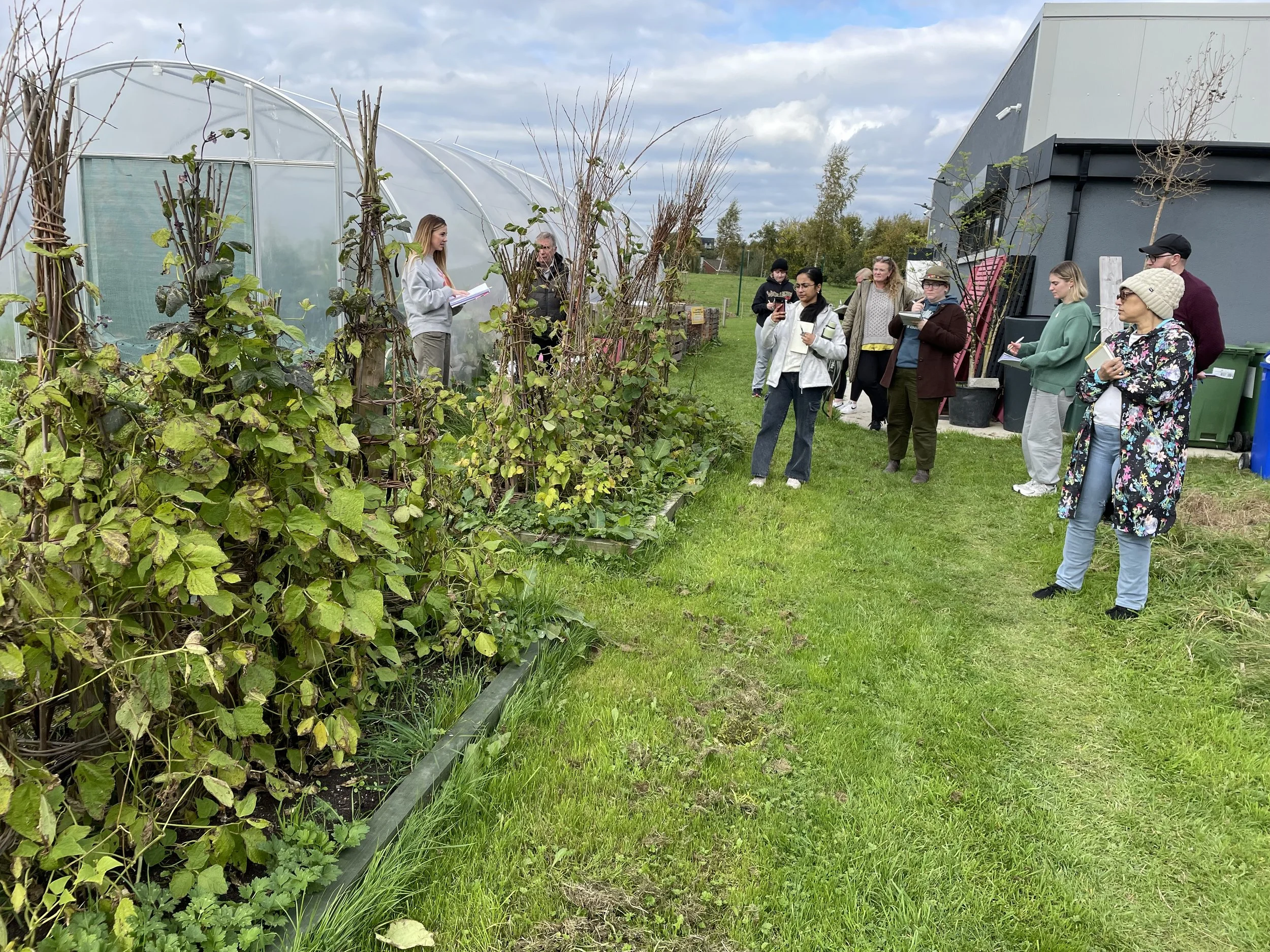
Figure 1. Tour of the Newbridge Family Resource Centre Community Garden with Our Shared Plate, for the ‘Spatial Justice and Public Engagement’ MA class at Maynooth Geography, 17 October 2025. Photo courtesy of Our Shared Plate.
This blog draws upon our tour, as well as related conversations with community partners. We begin by first by defining community gardens and their important role in green infrastructures, climate resilience and sustainability, providing examples in the U.S. and Europe. We then discuss the important work by OSP in supporting sustainable community infrastructures and introduce one of its community partners, the NFRC. We describe the NFRC community garden and consider how such a wonderful food growing and sharing space was created in such a short period of time through their partnership with OSP. We also acknowledge the role of community volunteers, discussing some of the limitations and benefits for the community. The next blog will provide a more general overview of the outcomes of the OSP pilot phase (2024-25).
What is a Community Garden?
In the simplest terms, a community garden is a place where members of a community gather to grow plants. The Planning and Development Act 2024 (Government of Ireland, 2024, p. 127) define a ‘community garden’ as:
an area of land that— (a) is let or available for letting from a local authority to members of the local community for collective gardening purposes, and (b) is used or intended for use— (i) wholly or mainly for either or both of the following: (I) the production of vegetables or fruit mainly for consumption by members of the local community; (II) the propagation of plants for environmental or decorative purposes in the local community, and (ii) otherwise than for profit.
Community Gardens Ireland describes community gardens as ‘all about sharing’, including the work and harvest. Each garden is unique and varies in size, design and function, depending on the goals of the community, access to and physical/social conditions of the shared plots, and members’ time spent enjoying and maintaining the garden. Community gardeners may decide to grow vegetable and fruit produce for members to consume, share with others, and/or sell at farmer’s or organic markets, such as Farm Philly in Philidelphia. Other gardeners grow only flowers, such as the .13 hectare Convent Community Garden in New York City, which is owned by the city, under management of the Parks Department, but the design and maintenance of the garden is all done by the Convent Community Garden Association, many of whom live in the immediate neighbourhood of the garden (Figure 2). The primary function of this garden is for growing garden plants and flowers and to provide a quiet ‘pocket’ green space to relax and take some fresh air with others living near their homes. Some gardens may host social activities and neighbourhood events open to a larger public, such as at Mud Island in Dublin and The Shared Garden Of Sainte-Madeleine Place in Strasbourg.
In Europe and Ireland, community gardens are typically managed by a group or collective, unlike allotments, which include individual plots on shared land where individuals and families grow produce. In Bristol, UK, for example, users have access to 300 square yards and are charged 40 GBP per year for water, electricity and a rented shed on their allotment. (In the U.S., some shared plots that are similarly managed are called community gardens as the term ‘allotment’ is not commonly used.) Community gardens and allotments have shared histories and practices, including ‘victory gardens’ in which families grew their own food to survive during World War II, and the ‘Back to the Land’ movement during the 1960s-70s which is said to have had a resurgence in recent years in the US and UK.
Scholars argue that while community gardens contribute to climate resilience, they are rarely included in adaptation plans, especially in cities; they further act as a tool for environmental education (Clarke et al., 2019). Food and crop systems are especially vulnerable to climatic changes, and decreasing the length of production can be an effective way to foster resilience and autonomy. Further, Community Gardens Irelandalso note the positive social and economic, as well as environmental impacts of community gardens. The incorporation of greenspaces in city planning has been argued to promote equity and inclusion. Community gardens can empower members through strong social networks and group cohesion, learning from the land, and working together to face social and environmental challenges in the future. As we discuss below, place-based approaches to community building through food sovereignty, like Our Shared Plate, also support intergenerational exchange and environmental education.
Building Community Sustainability through Our Shared Plate
Avid ‘Eye on the World’ blog readers may recall our first post written by Mills, et al. (2024) following one of the first Our Shared Plate community engagement events in Castle Dawson Estate, a neighbourhood in Maynooth. This event was held in April 2024, which roughly marked the beginning of OSP’s direct engagement with communities in its pilot phase. In 2024-25, OSP was awarded a Community Climate Action Project grant from the Department of the Environment, Climate and Communications’ through Pobal. The purpose of the OSP pilot was to gain an understanding in how best to approach, assist, and collaborate with neighbourhoods to create shared growing spaces that residents can continue to lead themselves.
Over the past eighteen months, OSP has acted as a ‘community infrastructure’ or focal point between local authorities, community partners, Maynooth University Geography researchers, and local residents to co-facilitate shared growing spaces in nine different communities in Kildare, Laois and Longford counties. Keeping in mind Neighbourhood Network’s overarching mission to build healthy and resilient communities, OSP specifically supports food sovereignty and climate action by nurturing growing, cooking and eating together. Depending on the neighbourhood, this may mean transforming underused areas into community gardens, planting edible hedges and forests (Figure 3), installing raised beds and polytunnels, and even designing and building a community oven. Designing a community project together gives residents the opportunity to get to know one another and develop friendships, such as through Street Feast, addressing problems of social isolation and loneliness. Building a shared space where community members sow, grow, harvest, cook, and eat food together simultaneously promotes social inclusion, intergenerational exchange, and environmental education.
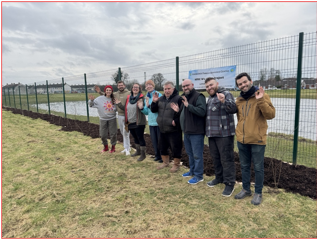
Figure 3. Newbridge planting workshop with Lucy Bell, April 2025. Photo courtesy of Our Shared Plate.
‘The Stars Aligned’: An Overview of the Newbridge Family Resource Centre’s Community Garden
This brings us to our case study, the Newbridge Family Resource Centre (NFRC), the last community OSP worked with during their pilot. Established in 1984 in Dara Park, the NFRC is surrounded by four local council housing estates yet provides services for the growing Newbridge community in general, of about 25,000 people. Their website states that the values of the NFRC are community led, welcoming, trust, non-judgement and empathy. This is reflected by the core team of paid staff with community development training and volunteer staff who come from the local area who share the values of community growth and family. NFRC’s values are also reflected in the services offered for all age groups, from the Parent and Toddler Group to the Homework Club, from the Youth Club to the Inbetweeners Group (for those who do not fall into their other age- or gender-specific groups). The centre also offers a Preparing for Life programme, which offers home visits from pregnancy and after birth, an important service in a country with an overstretched health system for new mothers and families. The centre also offers a Singing Club and Sensory Garden for well-being, as well as counselling, play therapy and clinics on housing and domestic violence support. The NFRC Strategic Plan for 2022-2027 is a detailed document which sets out everything that the centre stands for. Anybody who is interested can view what they have done so far and what they plan to do across the next couple of years. As one of the more than 120 Family Resource Centres nationally, they receive funding from the Child and Family Agency Tusla, the National Lottery and Pobal, as well as smaller pilot projects like OSP.
Although the NFRC was the last community OSP worked with, the centre’s directors said the ‘stars aligned’ as they and OSP shared many of the same goals and values. The NFRC had a large green space to the rear that could be transformed into a community garden. With this readily available resource, OSP organised a range of community events and workshops with the NFRC to design and built the garden over nine months. Some workshops complemented already existing initiatives, such as the ‘Pixels and Petals’ project in which adult learners worked with horticulturalist expert Lucy Bell to design the garden. Subsequent workshops included testing and mapping soil health, water drainage, wind and sun; planting edible forests and hedges (Figure 3); establishing the polytunnel and raised beds; and cooking and nutrition. Other workshops included a pop-up Seed Library with Kildare County Council, and on composting, water harvesting, and willow weaving – all taking place in this past year. Residents also participated in a community mapping activity with Maynooth’s Geography research team to document local food availability and access, as well as alternative healthy food sources and green spaces, and met with the OSP Kildare County artist-in-residence, Jennie Moran (Figure 4).
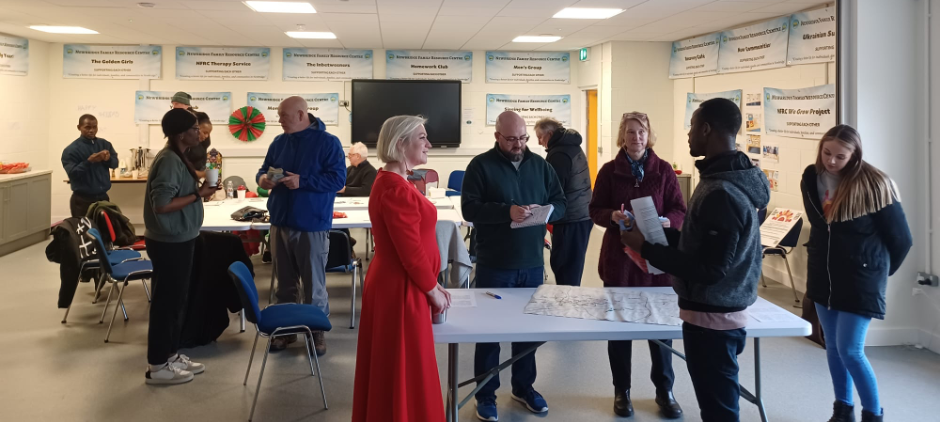
Figure 4. Newbridge community members mapping food access with Maynooth Geography researchers, with artist Jennie Moran (to the left) looking on. Photo courtesy of Our Shared Plate.
The MA Spatial Justice Class Visit
When we visited the garden last month, it looked like it had been under community care for many years. You enter the garden via back door of the NFRC, emerging from a tight hallway into a bright open space. The first thing you see is a kite stuck into the ground that looks like a flying fox. It makes one think of happy children, and you realize you can hear the laughing of children from the centre’s creche outdoor play area a little distance away. The garden feels expansive and lived in, has delineated spaces for growing produce intensively and more passively, and spaces just for wildlife, as well as benches for people to relax and enjoy.
To your left is a large polytunnel that was filled to the brim with an excess of ripe tomatoes and cucumbers despite the cold October air. Inside there were additional delights: a lemon tree, a grape vine, and a fig tree, all promising fruit in the future. On one side of the poly tunnel is a composting and rainwater collection set up, and on the other side are herb beds filled with sage, parsley and other savoury herbs (Figure 5). Behind the polytunnel are productive raised beds that host seasonal plantings that thrive in the October weather – carrots, cabbages, kales, and broad beans that climb up willow structures made by community members during a workshop earlier in the year (Figure 6).
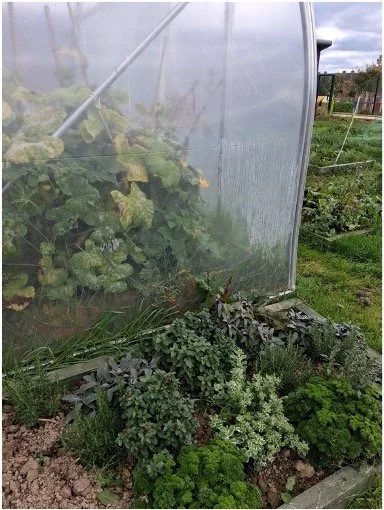
Figure 5: Inside the polytunnel, summer cucumbers sprawl, heavy with fruit. Outside the polytunnel, vivid green herbs grow in the crisp autumn air. Photo by Kate Hemsley.
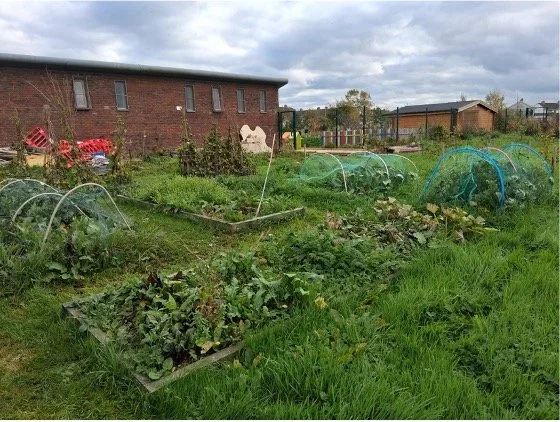
Figure 6: Behind the polytunnel are raised beds for all kinds of winter and fall vegetables. Willow arches fashioned by community members provide support for climbing beans and nettings to keep the birds away. Photo by Kate Hemsley.
The fenced in space all around hosts a home for a newly planted edible hedge of various indigenous berries. Beyond the vegetable raised beds is the newly planted orchard of baby apple and pear trees and beyond that, an area left to go wild as habitat for birds that will eat the slugs, and bees that will pollinate the flowers (Figure 7).
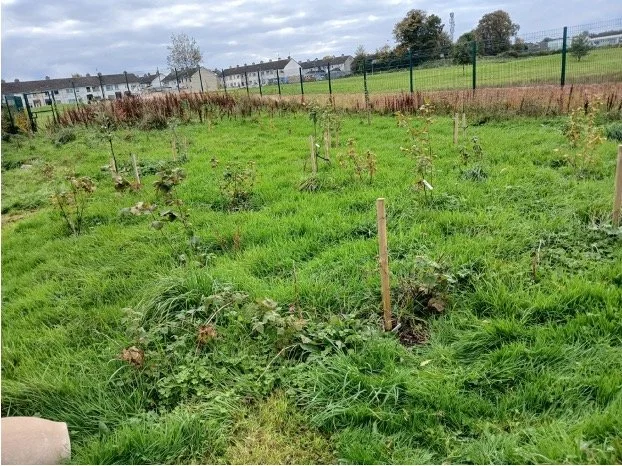
Figure 7: In the foreground one can see the fruit tree saplings marked with wooden posts. Beyond, the beginnings of the woodland area for birds and beneficial insects. Photo by Kate Hemsley.
This is a community garden made up of shared garden beds, shared orchards, and shared spaces. No one direct person oversees its care, nor are community members charged money to participate in it. Throughout the space there are benches and chairs to sit on, so volunteers can take a break when weeding or harvesting, emphasizing the communal and social nature of this garden. At the same time, the development of the OSP and NFRC community garden required both specialist knowledge as well as voluntary labour to construct and put in the raised beds, polytunnel, plantings, and the composting, leaf mould, and water catchment systems.
Community Gardens and Diverse Economies: The Role of the Volunteer
Because OSP is part of the charity organisation Neighbourhood Network, certain roles require volunteers. The same is true for the NFRC. Volunteers complete crucial work without receiving monetary payment. Their labour is often highly appreciated within an organisation or community, although non-profit work can be overlooked by employers in capitalist labour markets (Gibson-Graham, 2020). Yet the achievement of the OSP partnership with the NFRC stands as a wonderful example of what voluntary work as a ‘diverse economy’ (ibid.) can accomplish.
The most recent census on voluntary work in Ireland revealed that nearly 14% of the population completed voluntary work in 2022 (Arwitz, 2025). It is evident that volunteers will continue to be a cornerstone of charity and community organisations going forward. Despite this, tight budgets prevent charities from providing paid roles to local publics. On our visit to the NFRC, we learned that OSP and NFRC staff wished they could pay their volunteers but lacked the money and resources to do so. This is an ongoing conflict within charity work, in which volunteering is seen as a ‘necessary evil’ in achieving shared goals.
Volunteering also shapes organisations into sites of community comfort for local publics. By working with volunteers, OSP continues to shape this community garden to suit the needs of Newbridge’s public. Volunteers have their own host of reasons for joining a project. A volunteer for Street Feast of Neighbourhood Network, for example, stated that her own wish to socialise and meet people during Covid drove her to volunteer and support other community members to do the same.
We met a volunteer gardener on our Newbridge trip, Paul Corden, who mentioned to us that he had been gardening all his life. He provided a tour of the different parts of the community garden, arriving ready to help with a rake in hand and explaining how they used the fallen leaves from the trees in the compost to help the produce grow. He also told us about the raised beds, which accelerated the growth process by keeping plants warmer and closer to the sun. He offered our class a planting workshop and was incredibly patient when we planted cloves of garlic, especially since some of us had very little to no gardening experience at all. Paul dug the holes for us to place our cloves of garlic into under his guidance, explaining the depth needed and direction (top and bottom end) to plant each clove (Figure 8). He was always willing to answer any questions that we had along the way.
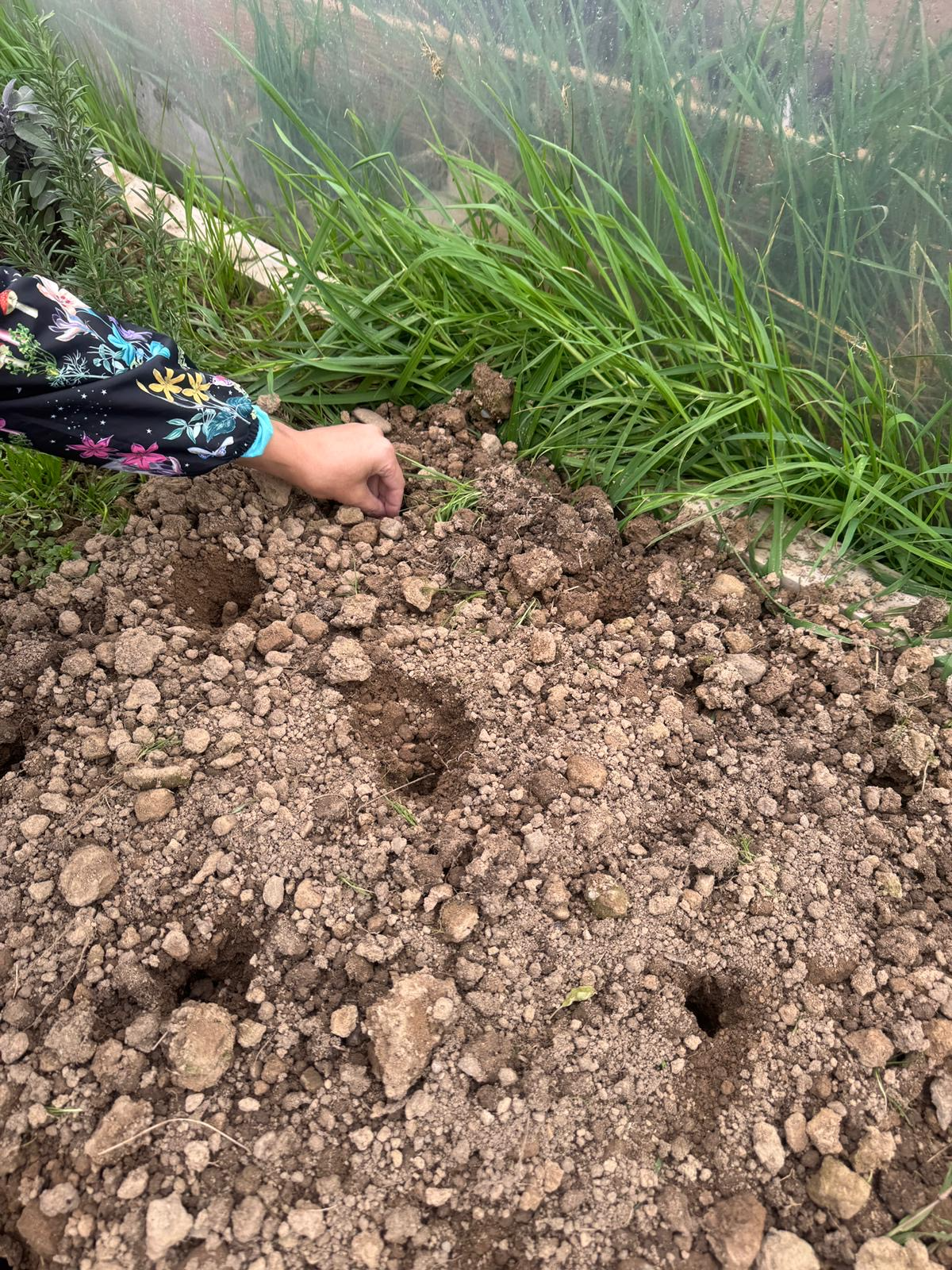
Figure 8. Learning to plant winter garlic with volunteer senior gardener at NFRC. Photo courtesy of Our Shared Plate.